Polymers can be found everywhere in our daily lives. They appear in everyday objects like clothing, plastics, and rubber bands, and they also play a huge role in industry and manufacturing.
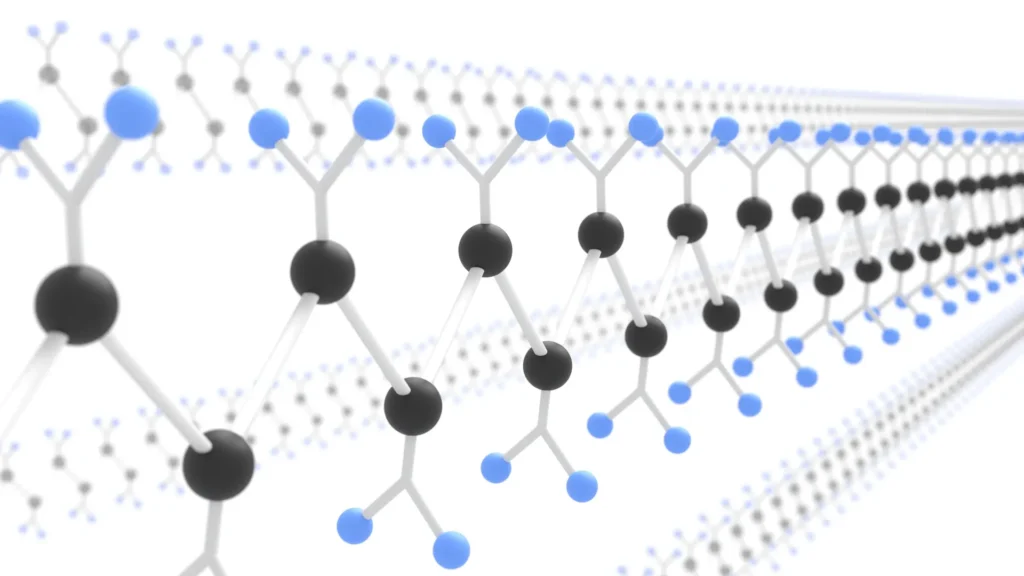
In simple terms, polymers are large molecules made up of long chains of repeating smaller units. A common analogy is a necklace made of beads, where the beads are the repeating smaller units and the whole necklace is the polymer. These individual units are also known as monomers—the “mono” prefix comes from the Greek word monos, meaning alone or single.
Natural and synthetic polymers
One common way to classify polymers is as natural or synthetic. Natural polymers can be found in nature and are essential to life. Some examples are DNA, the genetic “blueprint” for life; cellulose, which is found in plants; and proteins, which are made of amino acid monomers and are found in hair and skin cells.
Synthetic polymers, as the name suggests, are developed artificially by humans. They are designed to have specific properties that nature may not provide. Examples include plastics, synthetic fibers like nylon, and synthetic rubbers used in car tires.
How polymers are made
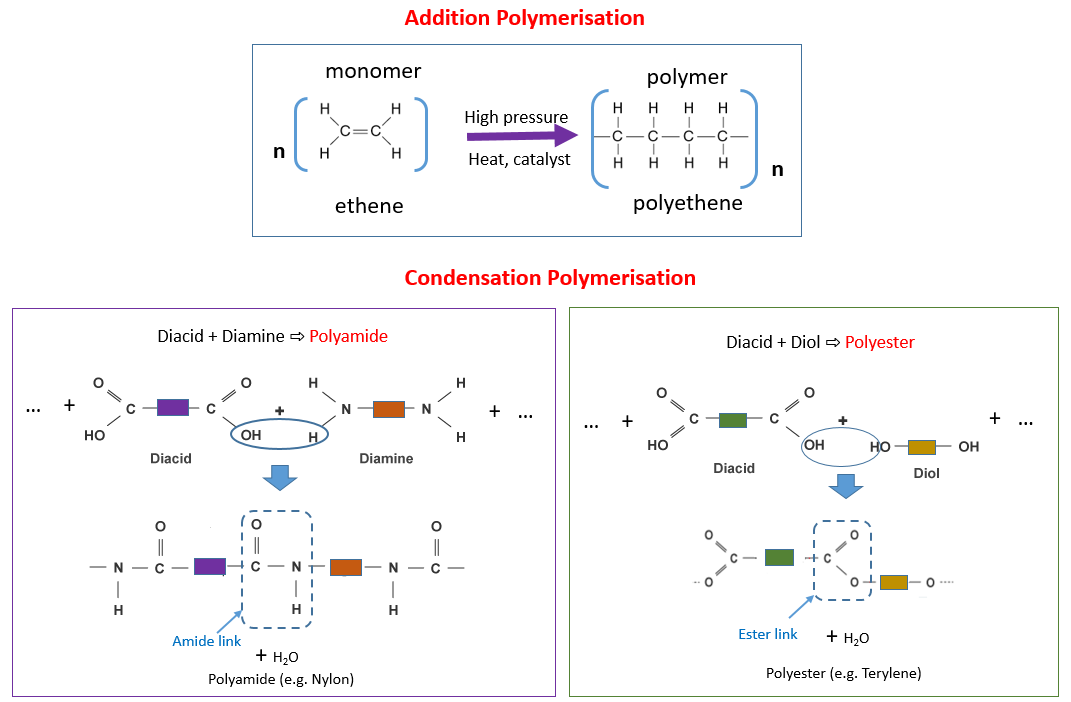
Synthetic polymers are created through a process called polymerization. During polymerization, smaller monomers are linked with each other to form polymers, often with the help of heat, pressure, or chemical catalysts.
There are two main ways for this to happen: addition polymerization and condensation polymerization. In addition polymerization, monomers simply “snap” together and form polymers. This is how plastics like polyethylene, which is used in plastic bags, are created. The process does not produce by-products. In condensation polymerization, monomers join together and release a small molecule as a by-product—often water, but sometimes another substance such as methanol.
How chain structure changes properties
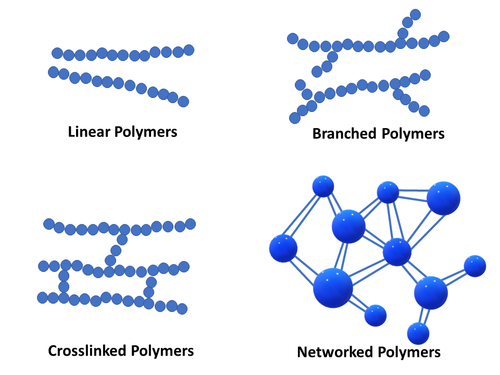
Polymers have many useful physical properties, though their specific properties depend on their molecular structure. Linear polymers have long, straight chains of monomers that can pack closer together, making them relatively dense and strong. HDPE, or high-density polyethylene, is one example.
Branched polymers have chains with branches sticking out of them, making them less dense and more flexible than linear polymers. LDPE, or low-density polyethylene, is an example. Cross-linked polymers have chains connected by chemical bonds, forming a network that makes them more rigid and heat-resistant. Vulcanized rubber is a strengthened version of natural rubber that contains these cross-chain bonds.
Useful—and worth using responsibly
Polymers are extremely important to daily life. Polyethylene’s flexibility and water resistance make it useful for plastic bags and food packaging. Silicone is heat-resistant and flexible, making it useful for baking tools and sealants.
Despite their versatility, polymers can also harm the environment through problems such as plastic waste. It is important that we work toward a more sustainable future through practices like recycling and investment in green technology, allowing us to use polymers while protecting the environment.