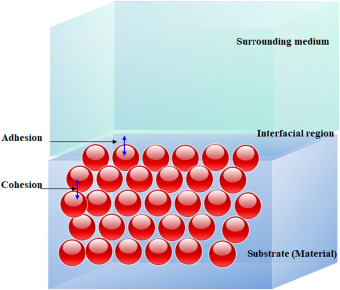
Surface science plays an important role in everyday life. It can help unpack things ranging from non-stick pans to the microchips inside the device you are using to read this post.
Surface science is the study of physical and chemical phenomena at interfaces between different phases—solid, liquid, and gas—or different materials. An important distinction is that surface science focuses on what happens at a material’s surface rather than in its interior, or bulk.
Bulk properties often involve atoms that are completely surrounded, less reactive, and “satisfied,” while surface properties involve higher-energy, less-coordinated atoms. Density and conductivity are examples of bulk properties, while adsorption and friction are more closely related to surfaces.
Surface energy
Perhaps the most significant concept in surface science is surface energy. It comes from the excess energy caused by unsatisfied atoms or broken bonds on the surface of a material. Systems naturally try to minimize this energy, which helps explain why water forms droplets: the droplet shape reduces surface area and therefore surface energy.
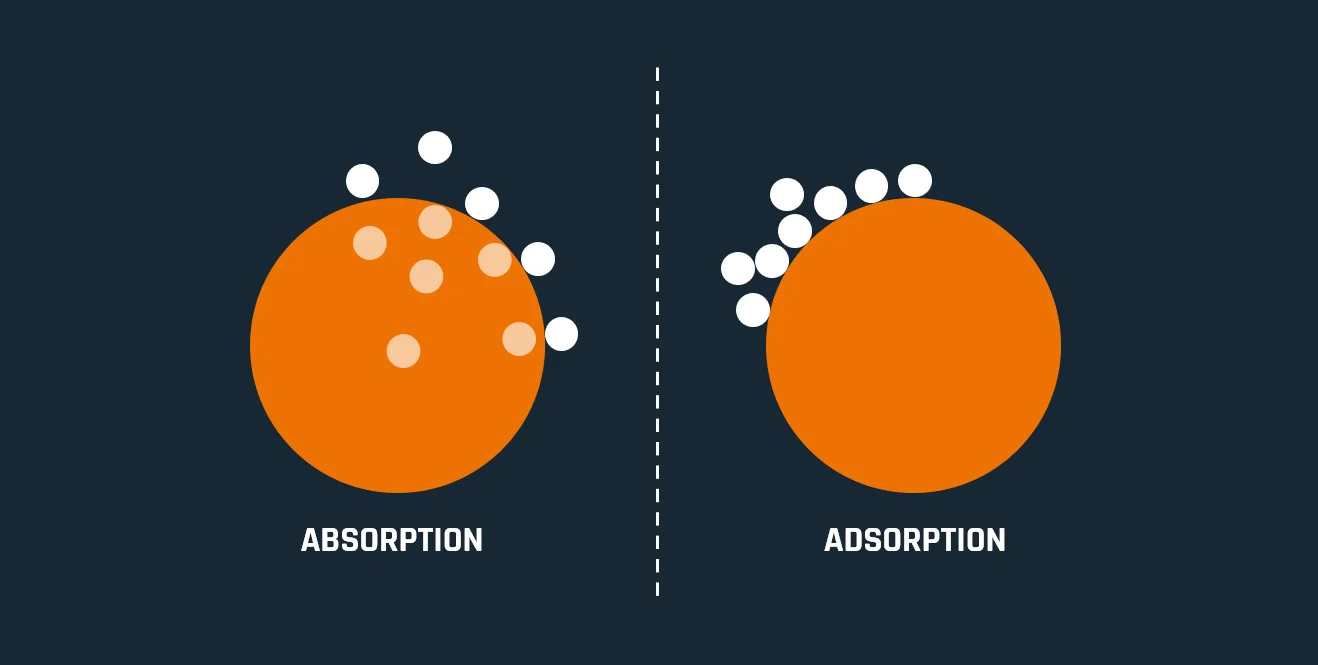
Adsorption is not absorption
Adsorption describes atoms or molecules sticking to a surface. This differs from absorption, in which atoms or molecules soak into a material. There are two types of adsorption: physisorption, which stems from weak van der Waals forces and is reversible, and chemisorption, in which strong chemical bonds form and the process is often irreversible. Adsorption is often the first step in a chemical reaction.
Reconstruction and thin films
Surface reconstruction occurs when surface atoms rearrange themselves to reach lower-energy positions. This matters because different structures at the surface can change a material’s reactivity and electronic behavior.
Thin films are very thin layers placed on a surface. They are often nanometers to micrometers thick, and they let us modify surface properties without changing the bulk material.
Surface science in the real world
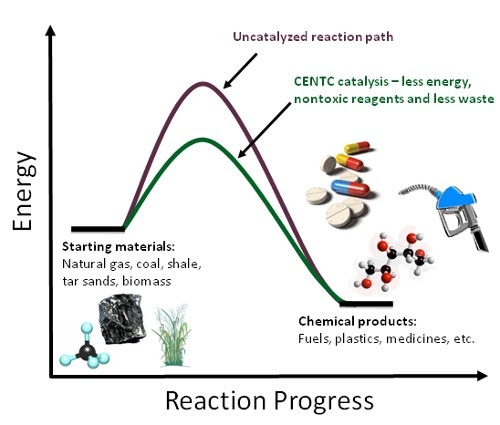
Catalysis is essentially surface science in action. A catalyst speeds up a chemical reaction without being used up. Its surface brings molecules closer together, weakens existing bonds, and lowers the activation energy needed to begin the reaction.
In electronics and semiconductors, surface science helps manufacturers build microchips from layers only nanometers thick. Overall, studying surface phenomena helps us explain and control interfacial chemical reactions, and it will become increasingly important as technology advances.